Alcohol culture, News - Events
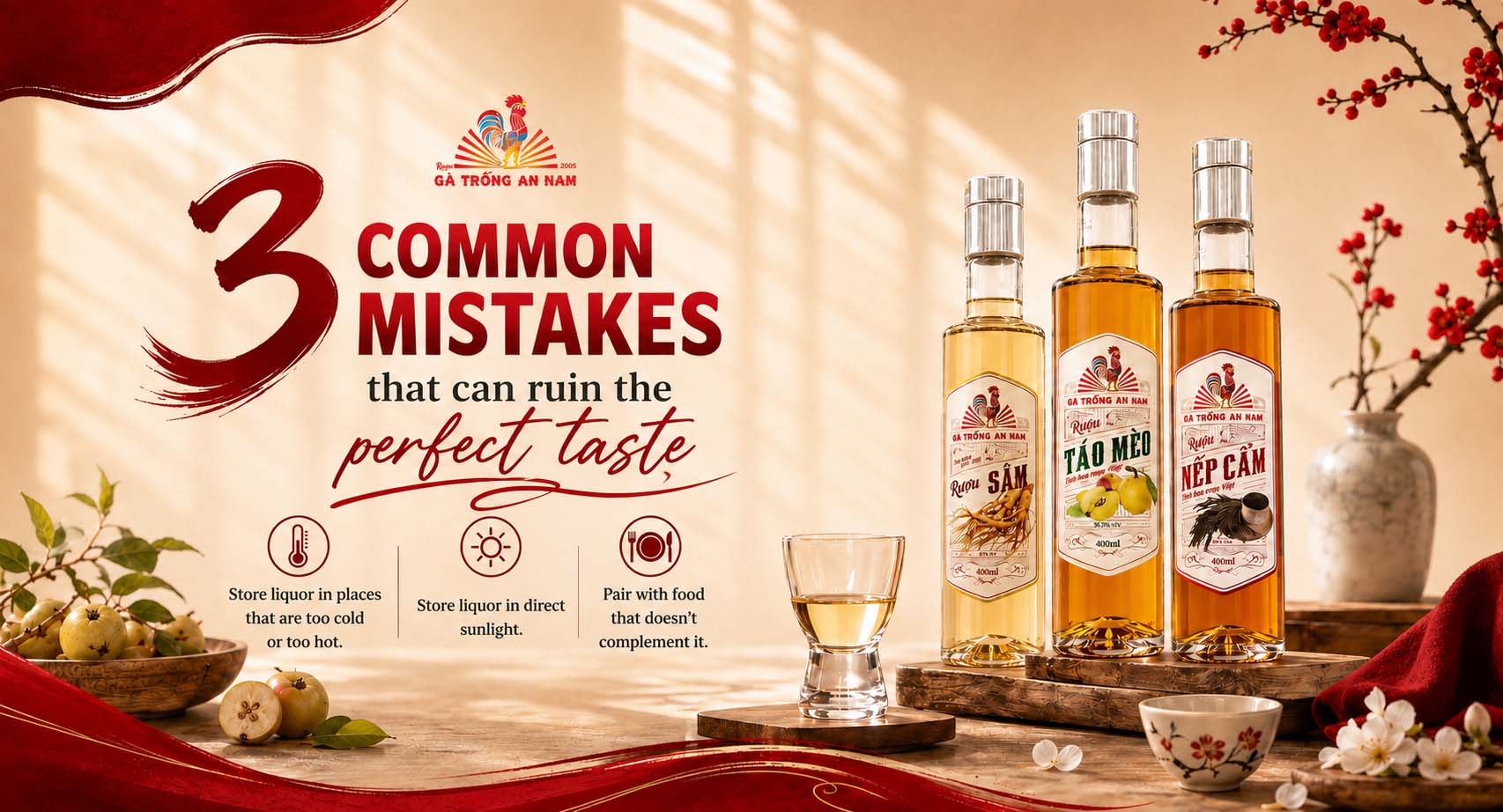
3 Common Mistakes that can tuin the Perfect Taste of Spirits
A quality bottle of spirits is the result of a long journey—selecting ingredients, fermenting, distilling, and aging over an extended period. However, that is only half the story. The rest depends on how the drinker stores, serves, and pairs it with food.
Many believe that simply owning a good bottle is enough to experience its full flavor. In reality, a few seemingly minor habits can diminish the aroma, unbalance the flavor structure, or mute the lingering finish. To ensure every raised glass offers the finest experience, join Ga Trong An Nam Spirits in discovering three common mistakes below:
1. Enjoying Spirits Before Reaching the Ideal Temperature
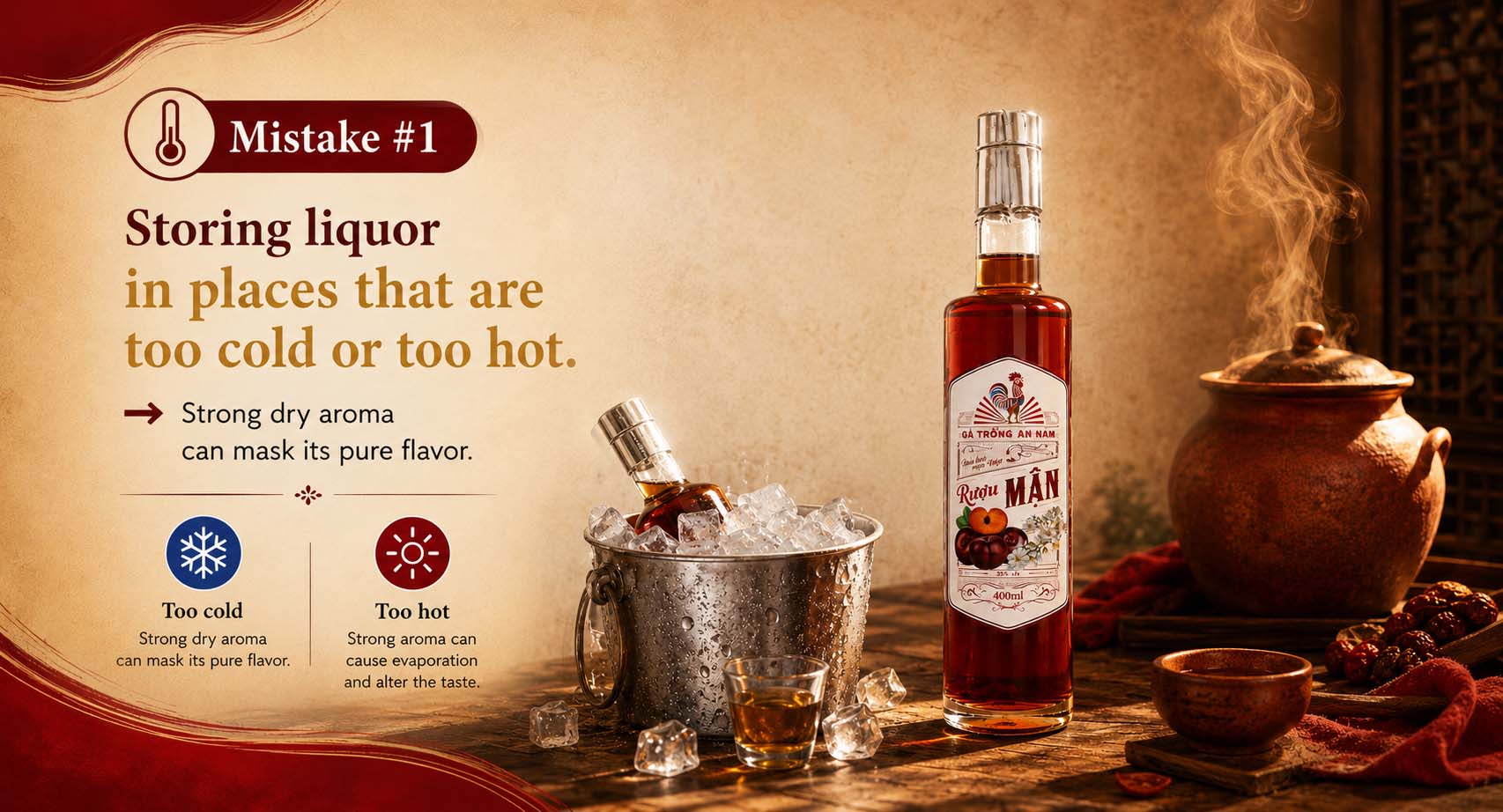
Temperature directly affects a spirit’s aroma and palate perception, yet it is often the most overlooked factor during tasting.
When a spirit is over-chilled, its aromatic compounds become less active, effectively “locking away” the scent. Drinkers may perceive the spirit as somewhat one-dimensional, lacking depth, and hard to appreciate its natural aromatic layers. Conversely, if served too warm, alcohol evaporates more rapidly. This accentuates a sharp alcoholic heat that overpowers the ingredient notes, disrupting the overall flavor balance.
Every spirit line has an ideal serving temperature range. For many fruit spirit selections, gentle chilling before serving helps the fruit notes emerge clearly, feeling vibrant and accessible. Meanwhile, many traditional rice spirits suit natural cool room temperatures or light chilling to preserve their full flavor structure intact.
2. Storing Spirits in High Temperatures or Direct Sunlight
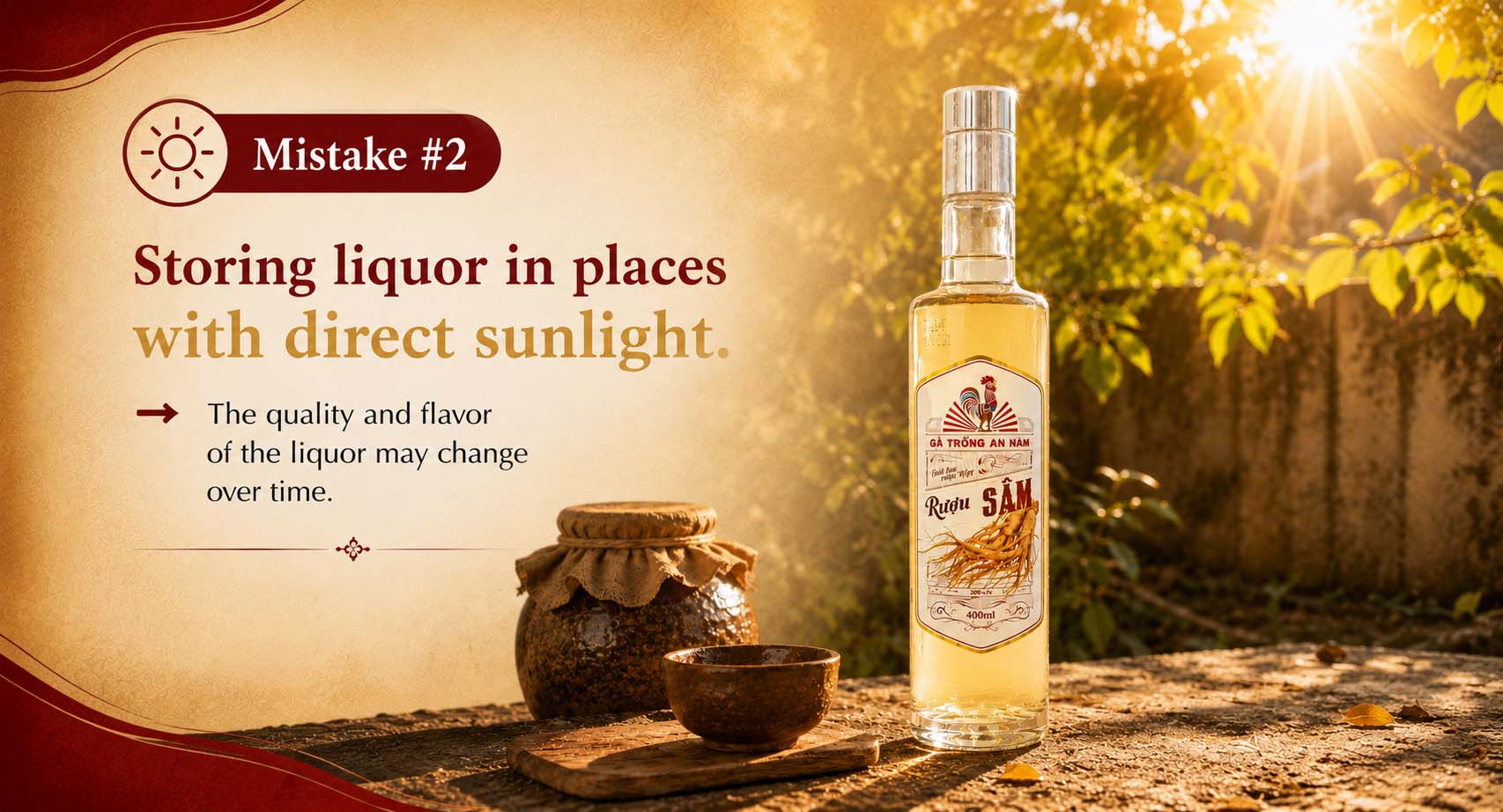
A common habit is placing spirit bottles on dining tables, near windows, or in spaces exposed to frequent sunlight. This is a primary reason behind the gradual decline in spirit quality over time.
Strong light, especially direct sunlight, can alter delicate aromatic compounds. Combined with high or constantly fluctuating temperatures, it accelerates oxidation, rendering the flavor profile unstable. Even if a bottle remains unopened, long-term storage in unsuitable conditions can still compromise its quality.
To maintain optimal flavor, spirits should be kept in a dry, well-ventilated place away from direct sunlight and sudden temperature shifts. Once opened, seal the cap tightly after each use to minimize air exposure. A proper storage environment allows the bottle to maintain its aroma, color, and balanced flavor structure throughout its use.
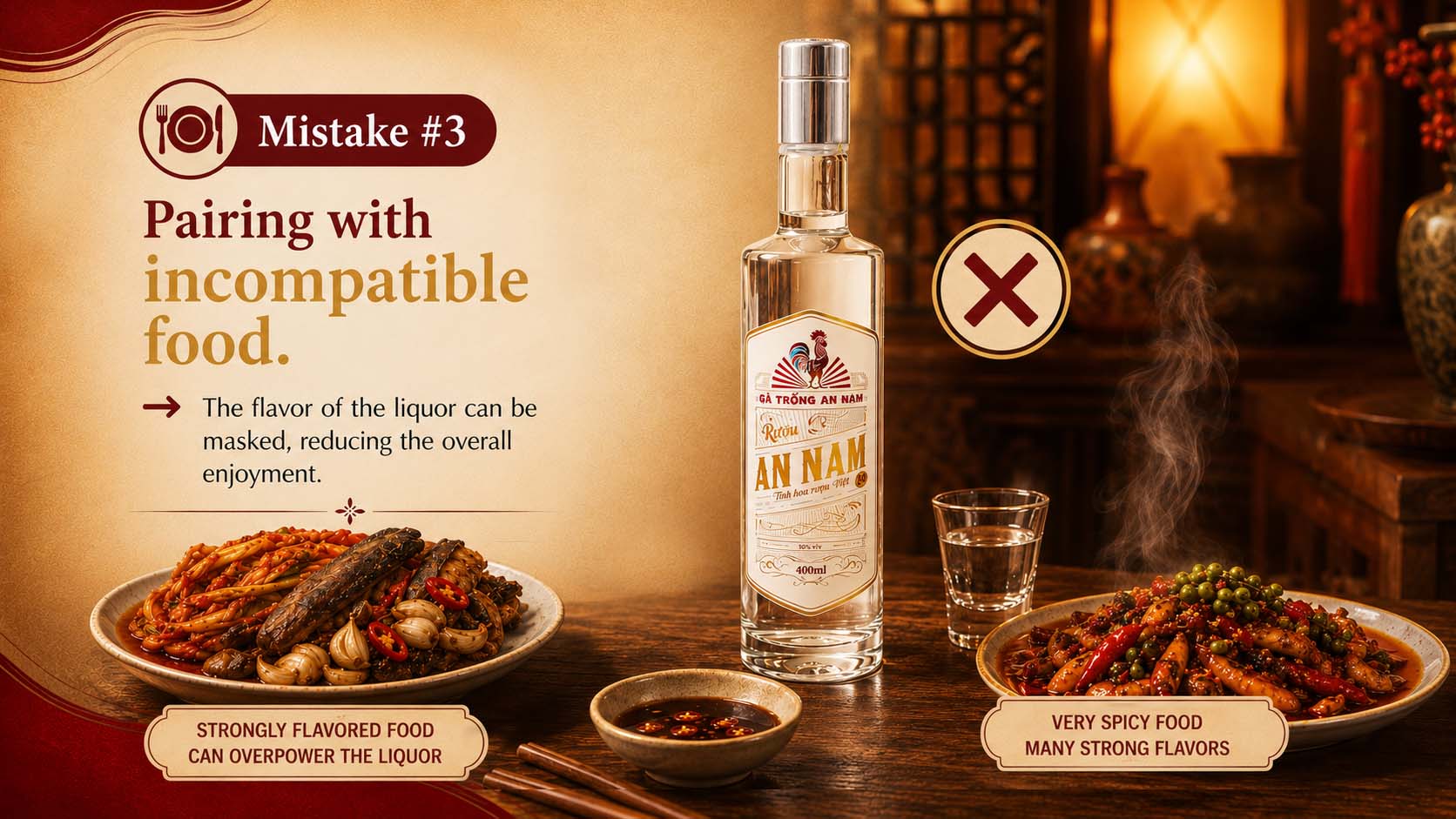
3. Choosing Food Pairings That Clash with the Spirit’s Profile
Spirits and cuisine share an intimate connection. A harmonious pairing elevates both the dish and the drink. Conversely, a mismatched pairing significantly diminishes the tasting experience.
Dishes that are overly spicy, heavily salted, or aggressively seasoned tend to overpower the natural aroma of the spirit. As a result, the drinker misses out on the signature aromatic layers and the refined finish that define the spirit’s value. Instead, grilled items, steamed dishes, hotpots, steamed seafood, or moderately seasoned recipes tend to yield better balance. These choices allow the spirit’s flavor profile to shine clearly while creating a harmonious feel throughout the meal.
Nowsaday, the trend of pairing spirits with fine cuisine is gaining broad interest. Selecting the right dish not only enhances the tasting journey but also reflects the host’s refined taste.
A meticulously crafted bottle of spirits fulfills its true value when properly stored, served at the right temperature, and paired with harmonious food. These seemingly small details significantly dictate the final impression on the palate.
Understanding your drink not only preserves its authentic flavor but also brings a more refined experience with every raised glass. When you pay attention to every detail—from storage to serving—each bottle will tell the complete story of aroma, structure, and finish that the craftsperson dedicatedly created.